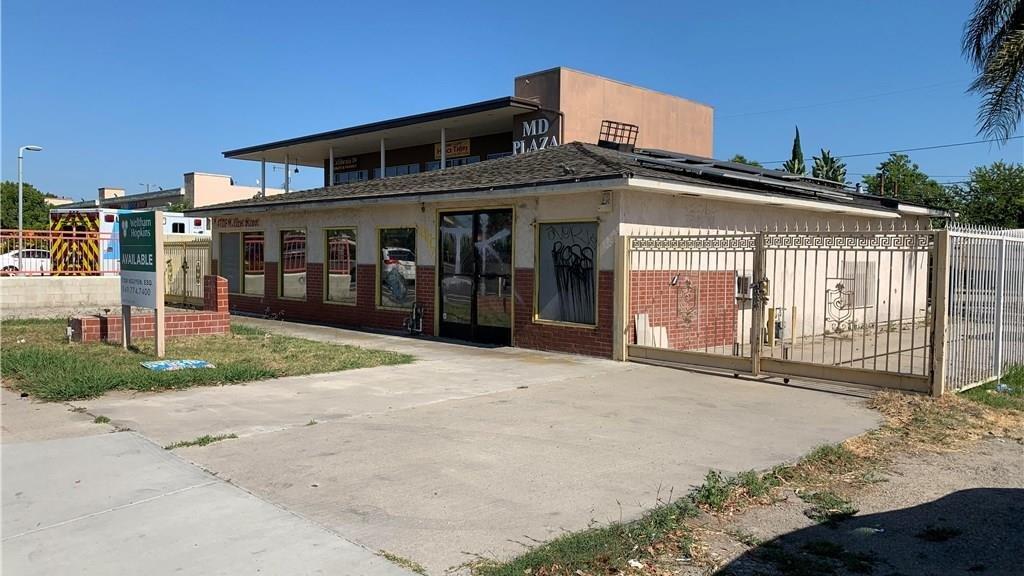
When a project spans a larger assembled site, a basic question arises: build everything at once, or in stages? Each approach has consequences for risk, financing, and returns. For a potential master site combining 4728 W 1st St and 4802 W 1st St, project sponsors and capital partners should weigh both options carefully.
Single-Phase Execution
In a single-phase project, the entire site is entitled, financed, and built in one continuous effort.
Advantages
- Efficiency. Mobilization, site work, and utility installation occur once.
- Shorter overall timeline. All homes are delivered at roughly the same time.
- Consistent design. The project is built as a unified whole.
- Lower management overhead. One construction loan and one schedule.
Disadvantages
- Capital intensity. Higher upfront equity and debt are required.
- Market timing risk. All units reach the market simultaneously.
- Execution risk. A single delay or cost issue affects the entire project.
Phased Development
Phasing divides the project into sequential stages, such as completing the first phase on the standalone parcel while planning the second on the adjacent lot.
Advantages
- Reduced peak capital. Equity and debt are deployed incrementally.
- Learning and adjustment. Lessons from phase one inform phase two, from design to pricing.
- Market responsiveness. The second phase can adapt to market conditions.
- Early revenue. Sales or leasing from phase one can help fund phase two.
- Flexibility with acquisition. The second parcel can be secured by option while phase one proceeds.
Disadvantages
- Duplicate mobilization. Costs for site setup, utilities, and management may recur.
- Disruption. Residents in the first phase may live beside active construction.
- Longer timeline. Total completion takes longer.
- Design coordination. Infrastructure should be sized for the final build-out from day one.
Decision Factors
- Capital availability. Do you have the equity and debt capacity for the whole project?
- Market absorption. How many homes can the micro-market realistically absorb per month?
- Interest rate environment. Higher rates make carrying costs more punishing.
- Entitlement status. Are approvals secured for both parcels or just one?
- Assemblage certainty. Is the second parcel under contract?
- Investor preferences. Some partners prefer quick exits, others stable multi-year programs.
A Simple Example
Imagine a combined project of 30 homes. A single-phase approach might require financing for all 30 homes simultaneously, while a two-phase approach builds 15 homes first and 15 later. If market conditions weaken, the sponsor could pause or redesign phase two. If conditions strengthen, phase two could capture higher pricing. The flexibility has value, but it also has costs.
Infrastructure Planning
Whichever approach you select, design infrastructure for the full build-out. This includes utility sizing, drive aisles, fire access, and stormwater systems. Retrofitting later is expensive and disruptive.
Risk Management Tools
- Options and contingent agreements to hold the neighbor parcel while phase one proceeds
- Staged capital commitments from equity partners
- Interest rate hedges or fixed-rate financing where possible
- Pre-sales or pre-leasing to confirm demand
- Contingency budgets for each phase
Key Takeaway
There is no one-size-fits-all answer. Phasing trades speed and efficiency for flexibility and lower risk; single-phase does the opposite. Choose based on capital, market, and risk tolerance.
Aligning With Your Partners
Phasing decisions work best when everyone shares the same expectations. Discuss with lenders and equity partners how they view staged capital, interim sales, and the possibility of pausing between phases. Put the agreed approach into the operating agreement and loan documents so that important decisions do not depend on informal understandings during stressful moments in the project.
Next Step
Request the risk management strategy brief from Global Estate Hub and discuss both scenarios with your capital partners.
This article is for general informational purposes only and is not legal, tax, financial, or investment advice. Verify all figures, zoning, and legal requirements with qualified professionals and the City of Santa Ana.